


| SUMMARY Who this is for: Commercial property owners and building managers in Buffalo, NY weighing flat roof options. Key takeaways: – TPO and EPDM are the two most common flat roof systems in commercial construction – TPO reflects heat and has stronger welded seams; EPDM is more flexible and handles cold better – For Buffalo’s freeze-thaw climate, both can work – material choice depends on your building’s age, budget, and use – Either way, installation quality matters more than the material itself What’s inside: – What TPO and EPDM actually are – How they compare on cost, durability, and performance in Western NY winters – Which one Buffalo’s Best Roofing recommends and why – What commercial roof repair and replacement looks like in Buffalo |
If you own or manage a commercial property in Buffalo, your roof is one of the highest-maintenance assets you’ve got. Flat roofs and low-slope systems take a beating in this climate. Ice, standing water, freeze-thaw expansion, weight from heavy snowfall. It adds up.
When it’s time to replace or repair a commercial roof in Buffalo, NY, the conversation almost always comes down to two materials: TPO and EPDM. They’re both single-ply membranes. Both are well-established in commercial roofing. And they perform differently in ways that matter specifically here in Western New York.
Here’s what you need to know to make the right call for your building.
First: What Is a Single-Ply Roofing Membrane?
Single-ply means the roof system is one layer of flexible, reinforced material rolled out and sealed across the roof deck. No built-up layers, no heavy aggregate. These systems are lighter, faster to install, and easier to repair than older built-up roofing (BUR) systems.
TPO and EPDM are the two most widely used single-ply options for commercial buildings. Between them, they cover the majority of commercial flat roof installations in the US today.
What Is TPO Roofing?
TPO stands for Thermoplastic Polyolefin. It’s a synthetic white membrane that reflects sunlight, which helps reduce cooling costs in summer. TPO has been widely adopted over the past 20 to 30 years and is now one of the most installed commercial roofing systems in North America.
TPO Key Characteristics
- White or light gray color that reflects UV rays
- Heat-welded seams that bond the membrane sections together when installed properly
- Strong resistance to punctures, tears, and chemical exposure
- Available in 45, 60, and 80 mil thicknesses (thicker = more durable)
- Typically costs $5 to $10 per square foot installed depending on thickness and roof complexity
The seam system is where TPO really stands out. When installed correctly with proper heat-welding equipment, TPO seams are actually stronger than the membrane itself. Water has a very hard time penetrating a properly welded TPO seam.
What Is EPDM Roofing?
EPDM stands for Ethylene Propylene Diene Monomer. If TPO is the newer kid, EPDM is the veteran. It’s been used in commercial roofing since the 1960s and has a long, documented performance history.
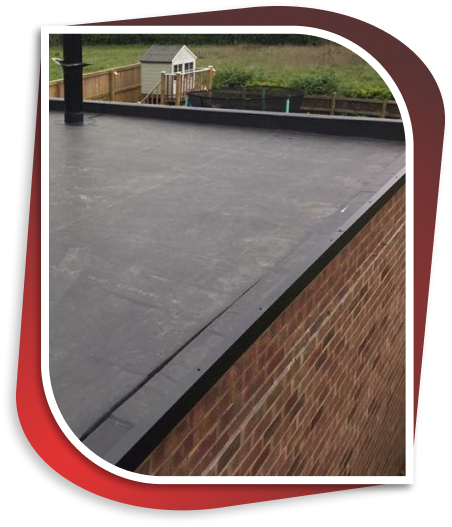
EPDM is a rubber membrane, typically black or white. It’s highly flexible, which makes it particularly well-suited for cold climates. When temperatures drop below freezing and a roof expands and contracts with temperature swings, EPDM moves with the building rather than cracking or pulling at seams.
EPDM Key Characteristics
- Available in black or white; black absorbs heat, white reflects it
- Seams are bonded with adhesive or tape rather than heat-welded
- Excellent flexibility in extreme cold, important in Buffalo winters
- Strong impact resistance; EPDM handles foot traffic and debris well
- Typically costs $4 to $9 per square foot installed
- Lifespan of 20 to 30 years with proper maintenance
The main vulnerability with EPDM is its seams. Adhesive-bonded seams, while effective when properly applied, are generally considered less watertight than heat-welded TPO seams over time. This is less of an issue with modern adhesives and tape systems, but it’s worth understanding.
TPO vs. EPDM: A Side-by-Side Comparison
Before we break down the details, here’s a helpful visual overview from a commercial roofing professional on YouTube:
Search ‘TPO vs EPDM commercial roofing explained’ on YouTube for several well-produced side-by-side comparisons from industry experts and roofing manufacturers.
Here’s how these two systems compare across the factors that matter most for Buffalo commercial properties:
Cold Weather Performance
EPDM has the edge here. Buffalo averages over 90 inches of snowfall per year, and the freeze-thaw cycle is severe. EPDM’s rubber composition stays flexible well below zero, making it less prone to cracking from thermal movement. TPO holds up well too, but some TPO products have shown shrinkage problems in extremely cold climates over time, though higher-quality 60 and 80 mil products have largely addressed this.
Advantage: EPDM in extreme cold; premium TPO is competitive
Energy Efficiency
White TPO reflects solar heat more effectively than black EPDM. If you have a large flat roof exposure and want to reduce summer cooling costs, TPO gives you a meaningful energy efficiency benefit.
White EPDM exists but is less common and typically costs more. If energy efficiency is a priority, TPO is the more cost-effective choice to get there.
Advantage: TPO
Seam Strength and Water Resistance
Heat-welded TPO seams outperform adhesive EPDM seams in direct comparison when installed correctly. This matters a lot on Buffalo buildings where ponding water from snow melt is a real concern.
That said, ‘when installed correctly’ is doing a lot of work in that sentence. Improperly heat-welded TPO seams can fail faster than a well-applied EPDM adhesive seam. The installer’s experience matters as much as the material.
Advantage: TPO (installer-dependent)
Durability and Lifespan
Both materials last 20 to 30 years with proper maintenance and inspection. Some EPDM installations have lasted 40+ years, though this is rare and depends heavily on the install quality and maintenance history.
Advantage: Roughly equal; EPDM has a longer track record
Cost
TPO is generally slightly less expensive upfront than EPDM. However, the difference on a full commercial roof replacement is often smaller than people expect. More important is the total installed cost with proper flashing, insulation, and adhesion, which varies significantly by contractor.
Advantage: TPO (slightly)
Repairability
Both are relatively easy to repair. EPDM patches are applied with adhesive tape. TPO patches are heat-welded in place. For emergency repairs in cold weather, EPDM’s adhesive system can actually be more practical since heat-welding equipment works better in controlled temperatures.
Advantage: EPDM for emergency cold-weather repairs
Explore our commercial TPO roofing and EPDM roofing services, or schedule a commercial roof inspection to evaluate your existing system.
What About Modified Bitumen?
Buffalo’s Best Roofing also installs modified bitumen roofing, which is a third option worth knowing about. Modified bitumen is a multi-layer system that’s highly durable and well-suited to buildings with more foot traffic on the roof, such as facilities with mechanical equipment that requires frequent access. It’s generally more expensive than single-ply systems but offers excellent durability in harsh climates.
So Which One Is Right for Your Buffalo Commercial Building?
The honest answer: either can work well. The choice comes down to your building’s specific situation.
Choose TPO if:
- You want to reduce summer cooling costs
- Your building is relatively new with a solid roof deck
- You’re getting a full replacement and want strong seam performance
- You’re working with a contractor experienced in proper heat-welding
Choose EPDM if:
- Your building is older and the roof deck has some irregularities
- Cold-weather flexibility is a top priority
- You need a repair or patch in the middle of winter
- You want the proven long-term track record of a material that’s been in use for 60+ years
At Buffalo’s Best Roofing, we assess each commercial property individually. The material recommendation depends on your building’s age, existing insulation, drainage design, and how the roof is used day-to-day. There’s no universal right answer.
Commercial Roof Repair vs. Full Replacement in Buffalo
Not every situation requires a full tear-off. If your commercial roof has localized damage, seam failures, or minor ponding issues, a targeted repair may extend the roof’s life by 5 to 10 years at a fraction of the replacement cost.
Signs you need a full replacement rather than a repair:
- The membrane shows widespread cracking, shrinkage, or extensive seam failures
- There are multiple active leak points across different sections of the roof
- The insulation layer beneath the membrane has sustained widespread water damage
- The roof is 25+ years old and approaching the end of its expected lifespan
- Repair costs are approaching 30% or more of replacement cost
Buffalo’s Best Roofing provides free commercial roof assessments across Western New York. Schedule your inspection here
Why Local Experience Matters for Commercial Roofing in Buffalo
A lot of commercial roofing companies operate regionally or nationally. There’s nothing necessarily wrong with that, but Buffalo’s climate is specific enough that local knowledge genuinely matters.
An experienced local commercial roofing contractor knows how to design drainage for heavy snow melt, how to detail edge flashings for ice dam prevention, which adhesive products perform in sub-zero temperatures, and what Buffalo’s building department expects on permit-required commercial projects.
Buffalo’s Best Roofing has emergency roofing services available for commercial storm damage, plus full commercial roofing installation across Erie County, Monroe County, and the broader Western New York service area.
Frequently Asked Questions About Commercial Roofing in Buffalo, NY
1. How much does commercial roofing cost in Buffalo, NY?
Commercial roofing costs in the Buffalo area typically range from $8 to $20 per square foot installed, depending on the material, roof size, insulation requirements, and extent of any existing damage. TPO and EPDM are on the lower end of that range. Modified bitumen and specialty systems cost more. Get a site-specific estimate for accurate numbers.
2. How long does a commercial flat roof last in Western New York?
A properly installed TPO or EPDM system should last 20 to 30 years in Western New York’s climate with regular inspection and prompt repairs. Annual inspections are recommended, especially in spring after winter stress.
3. Does Buffalo’s Best Roofing do commercial roof inspections?
Yes. Free commercial roof inspections are available across the Buffalo service area. Contact Buffalo’s Best Roofing to schedule.
4. Can I install TPO over my existing EPDM roof?
In some cases, yes. A ‘recover’ installation over an existing single-ply system can work if the existing deck and insulation are in acceptable condition. However, most municipalities require a full tear-off once the roof has had two layers. A site inspection will determine what’s feasible for your building.
5. What causes most commercial flat roofs to fail in Buffalo?
The leading causes are seam failures from freeze-thaw stress, ponding water that finds its way through compromised flashings, and aging insulation that loses R-value and contributes to ice dams. Regular inspection and cleaning of drains and scuppers dramatically extends commercial roof life.
6. Is TPO or EPDM better for a warehouse in Buffalo?
For a large warehouse with minimal foot traffic, TPO is often the better choice for its energy efficiency and strong seam system. If the building has heavy HVAC equipment requiring regular rooftop access, EPDM or modified bitumen may be more appropriate for their impact resistance.
7. Does Buffalo’s Best Roofing handle commercial emergency repairs?
Yes. Emergency commercial roofing services are available, including tarping, storm damage repair, and ice dam remediation. Visit the emergency services page for more.
8. What is a roof coating and is it an option for my commercial building?
A roof coating is a fluid-applied membrane applied over an existing roof system to extend its life and improve waterproofing. It’s most effective on roofs in good structural condition with localized deterioration. Buffalo’s Best Roofing offers roof coating services as part of commercial roofing.
9. How do I know if my commercial roof needs repair or full replacement?
The best way to know is a professional inspection. Visible signs that suggest full replacement include widespread membrane shrinkage or cracking, multiple separate leak locations, saturated insulation, and a roof over 25 years old. Isolated leaks or seam failures are generally candidates for repair.
10. Does Buffalo’s Best Roofing serve Rochester and Monroe County?
Yes. Buffalo’s Best Roofing serves the broader Western New York region including Erie County, Monroe County, Niagara County, and surrounding areas. View the full service area.